

— Oscar Wilde, Lady Windermere's Fan, 1892
Price is easy to explain. It’s visible, comparable, and simple enough to argue with. Value is harder, because it has to be understood before it can be measured.
I used to think FreePBX was a difficult name to sell. Not because I doubted the software. I had trusted it for years: built around it, broken things, fixed things, learnt where it was strong, and learnt where it needed an experienced pair of hands. I knew the difference between an experimental install and something you would actually trust in production.
The problem was the word free, even with a capital F.
There it was, salient, doing two jobs at once. To those who understood the category, it suggested an alternative commercial model. To those who didn’t, it risked sounding cheap before the conversation had even started.
Serious businesses rarely go looking for “cheap” these days. By the time internet-based services matured into critical commercial products, being associated with the word had become something most providers tried to avoid rather than embrace.
I didn’t want the first conversation about a phone system to begin with a language lesson. I didn't want a competitor to reduce the whole thing to “they are using free software”, as though that automatically made their service look more premium. Even if a customer did listen, I didn’t want them spending the whole conversation wondering: it’s free, so what’s the catch?
The old open-source explanations for the word free didn’t help. Perhaps they meant free as in beer. An ageing idiom somehow making the explanation worse the moment you use it. Software can be free. In 2026, beer usually isn’t. And now, instead of explaining a phone system, you are explaining why alcohol has entered the conversation.
Perhaps they meant free as in speech. It’s much closer to the point, yet it still leaves the commercial challenge untouched. These days, speech isn’t a neutral word either. It has acquired enough political and cultural weight to pull the conversation somewhere completely different. The phrase explains the philosophy to people who already care about the philosophy. It does far less for a customer who has heard the word free and is now wondering whether the product is cheap, poor quality, or not really free at all.
The preferred free as in freedom defence has a long-standing association with the project, and it tells its own story. It’s true, and an important open-source distinction, but the phrase also admits the tension. The word free was challenging enough that it needed rescuing almost as soon as it arrived.
The trap was inevitable. The more you explain the word, the more important the word becomes. Before you have talked about reliability and capability, you are already defending the name. So, is it free or not? Before you have even explained the phone system, you are already explaining the language around it.
I didn’t fear the name FreePBX being weak, I feared it being misunderstood. Many providers still feel this way, whether they admit it or not. FreePBX sits within plenty of services that won’t ever say FreePBX on the invoice. It gets renamed, wrapped, dressed up, and disguised behind generalised language:
Hosted Voice Platform. Cloud Phone System. Business Communications.
All the usual words you will find in the Services section of a typical IT provider’s website.
I did it too. For years, the instinct was to say less. Keep the software’s name out of the conversation and let the service speak for itself.
Rather than inventing a strained product name that vaguely resembled telecoms, we went with The VoIP Experience. A phrase about a feeling that sounded customer-facing at the time, and now sounds like it was trying a little too hard. When the initial trademark application was rejected, we shortened it to THEVOIPEXP. It felt commercially safe at the time, but looking back, it also made the proposition weaker. If I couldn’t explain why a customer should pay us for a FreePBX-based service, then the problem wasn’t the name. The problem was that I hadn’t explained the value properly.
There was another consideration too. FreePBX is Sangoma’s trademark, not ours, and that mattered. Even if you are using the software legitimately, there's a difference between saying what something is built on and making a name look like your own product. That distinction is important, but it also adds to the hesitation. The usual approach is to step back, use your own name, and describe the service without putting someone else’s trademark at the front of it. Uncertainty around where the line sat made it easier just to say nothing. For some providers, FreePBX doesn’t even make it into the sales conversation.
FreePBX isn’t difficult to sell because it’s free. It’s difficult to sell because it asks the provider to prove what they add. This is a sobering reality only experience teaches. It took me longer to accept than it should have. Hiding the foundation entirely misses the point. Worse than that, I think it can hide the value.
If the software is free to download, the service has to justify itself in a different way. The provider cannot lean on access alone. They have to explain why their involvement matters. If their explanation is strong, there’s nothing to worry about. If their explanation is weak, FreePBX was never the weakness.
The Word Free
Let me be clear that FreePBX is an awkward name for a serious commercial product.
It probably made perfect sense in the early days. It must have been good for SEO. Someone looking for a free PBX could type the obvious words into a search engine and there it was. FreePBX. The thing did what it said on the tin, which is useful when no one knows you exist, but not really how the name works now.
People don't stumble across FreePBX today because they search for "a free PBX" and find the exact software they need to build a business phone system. It may have happened in the past, and probably helped. I'm sure it mattered.
Today, FreePBX isn’t valuable because the name describes a free thing. FreePBX is valuable because a product became a brand. What a remarkable achievement.
FreePBX was tested, improved, documented, and built into real services by those who needed it to work. Useful modules were published for all to see. Forum answers accumulated and helpful guides appeared. Businesses formed around it, and lessons became common knowledge. At some point, the name stopped meaning “a free PBX” and started meaning the thing itself. That isn’t just clever marketing, it’s open-source folklore.
From a name easily dismissed, FreePBX became recognisable in a market full of expensive, polished, closed alternatives. The name didn't become good because it was clever. It became good because the software mattered, and because the project kept being carried forward.
Sangoma is part of that story. Not with fanfare, and not because every decision around FreePBX has been universally loved. That would be too simplistic and probably isn't true for any long-running software project. FreePBX has had its fair share of arguments and frustrations, and significant change always attracts critics and defenders.
Every few years the same familiar predictions return: This is the end. FreePBX is dead. Who's going to fork it? The critics play musical chairs, the arguments evolve, but the conclusion is always the same. And yet, here we are. Personally, I believe FreePBX is on a surer footing than ever.
Most open-source projects don't last. They gather interest, lose momentum, and eventually become something remembered from an old forum post. FreePBX did something much harder. It stayed visible, usable, and relevant. Projects don’t achieve this by accident. Sangoma’s stewardship is widely undervalued.
Community gives open source life, but stewardship gives it shape. Sangoma helped turn FreePBX into reliable software providers could trust and build their own businesses around. You can credit that without pretending everything is perfect. In fact, it’s the more honest position.
Know Your Audience
There's an uncomfortable truth about the name. Most customers understand the word Free more quickly than they understand the word PBX. It bothered me for years, because I assumed the wrong word was landing first. If a mainstream business customer didn't know what a PBX was, but did know what free meant, then FreePBX could sound risky before the conversation had even started. I am no longer sure that was the right way to look at it.
Why are we targeting a customer that doesn't know what FreePBX is in the first place?
I don’t mean this dismissively. It’s a genuine question, and one I probably should have asked myself earlier. If a customer has no interest in the software, no curiosity about how the service is built, no concern about ownership, hosting, support, then FreePBX was never supposed to speak directly to them.
FreePBX is brilliantly niche. It says exactly what it is, in a way that almost refuses to smooth itself out for the mainstream. It isn’t trying to sound like a glossy cloud-comms brand. It isn’t hiding behind softer language. It’s free in the open-source sense, and it’s a PBX. Full stop. It’s more powerful if you stop trying.
The name works best for those who already understand enough to care and are curious enough to ask the next question. An IT provider understands PBX. A telecoms person understands PBX. A technically minded business owner may not know every detail, but they usually understand enough to realise the word free isn’t the end of the conversation. For that audience, FreePBX isn’t a weak name. It’s a signal.
It tells them there's a project, a community, an ecosystem, and a body of knowledge behind it. This may narrow the audience. Good.
Not every product has to chase the least curious buyer. Not every service has to be softened until it sounds like everything else. Sometimes the niche is the strength, because the right people recognise it faster.
I learnt that lesson the hard way with 20tele.com. We built a simplified version of our website designed to capture an audience who just wanted to make and receive calls and had no interest in how it worked. The thinking seemed obvious enough. Remove the technical detail, make everything easier to digest, and widen the appeal.
The truth is it took a tremendous toll on me. I spent months simplifying something that had taken almost two decades to understand. I could have authoritative conversations with like-minded techies, and I convinced myself that reducing it all to a "me too" product was progress.
I called my Sangoma account manager, someone I trust and admire, to express my concern. We discussed the direction 20tele was heading. "I could be selling anything underneath this," I said. He got it. The fact he got it was the issue. Someone who had always encouraged whatever path I was on was now echoing my concerns and suggesting I should revert. I genuinely thought dumbing it down for wider appeal would be Sangoma’s preference. It wasn’t. Somehow, we had lurched into becoming just another telecoms reseller that didn't need FreePBX to be the software. Damn.
After many years with Sangoma, he's retiring. I hope he enjoys it. I doubt he realises how many people he has helped through conversations like that one. I am grateful for the influence he had on me.
That conversation changed the way I thought about what customers were actually paying for. What they wanted to pay for.
FreePBX is free to download, which is both true and useless on its own. That’s like saying water is abundant in nature, therefore no one should charge to supply or sanitise it. Water can be free too, but that doesn’t mean it’s safe to drink.
The boring details are the product, and it took me a long time to say plainly. In the early days, I wanted THEVOIPEXP to look more mysterious than it was. Not to deceive anyone, but because mystery can feel like protection. If the customer cannot see the moving parts, they are less likely to question why they are paying. I never really thought it was better and I certainly don’t now.
The work is never free. It’s paid for in time, mistakes, late nights, and all the little scars that eventually become muscle memory. That's what customers are paying for. Not FreePBX itself, but FreePBX taken seriously.
Changing The Name
There's no suggestion Sangoma intends to change the FreePBX name. Quite the opposite, from everything I can see in my position as Head of Product at FreePBX UK.
Imagine FreePBX being renamed to something more corporate. On paper, I can see the argument. A new name could avoid the cheap assumptions. It could sound more enterprise-grade and easier to sell.
Perhaps there have been internal meetings where all of that sounded sensible. But I know changing the name would be a mistake because I have tried selling PBXact. Can you guess how I explained what it was? You’re right. It’s FreePBX without the free.
Selling PBXact taught me something important. The awkwardness of FreePBX is no longer separate from its value. It has become part of it. Even when explaining Sangoma’s commercial product, I found myself relying on FreePBX to make the point. FreePBX isn’t a perfect name, but it’s a known name. More than that, it’s a name with history. That’s not easy to replace, rebrand, or reinvent. I wasn’t hiding it; I was using it.
This isn’t a criticism of PBXact. Commercial licences, inclusive softphones, and a more cautious update track all have real value. PBXact is a masterclass in packaging a commercial offering on top of an open-source foundation, but it also proves the point. It remains closely tied to the FreePBX name, understood by many as FreePBX with a commercial layer on top.
Keeping the name costs Sangoma almost nothing. Changing it would cost far more. Not just in design work, redirects, documentation, and the usual machinery of a rebrand. The true cost would be meaning. FreePBX already has what most rebrands are trying to manufacture: recognition, search terms, familiarity, and a place in a market where it already belongs. That's what makes behaviours around the name so interesting.
There are many users and providers who rely on FreePBX, build services around it and trust it in production, yet still bury the name. They hide it behind their own branding and soften it into generic platform language. They treat FreePBX like something useful underneath, but inconvenient in public.
Embarrassed is too strong in some cases. Nervous is a much fairer accusation.
Either way, the result is the same. The project has earned a name worth more than many people using it are prepared to admit.
In Plain Sight
FreePBX is often described as having millions of installations worldwide. The official project has talked in those terms for years, and even if we treat the numbers carefully, because installations aren't the same as active commercial systems, the scale is still substantial.
And yet, if you search for obvious FreePBX providers, the market looks strangely thin.
There are a handful of providers that say the name directly and are upfront about FreePBX, but the ratio still feels disproportionate. The public commercial visibility doesn’t seem to match the claimed installation figures.
I understand why, because I have felt the pull myself. The result is imbalance. FreePBX appears to have enormous footprint, but a provider-led ecosystem far smaller than usage would imply.
It matters, because perception is shaped by what is visible. If the people using FreePBX hide it, the market sees less confidence than actually exists. If providers bury the name, customers assume the project is smaller, weaker, or more fringe than it really is. If the commercial layer is muted, the loudest signals come from the official project, the forums, and the occasional specialist, rather than from the full weight of the people building profitable businesses around it.
White-labelling a service built around FreePBX is one thing. Pretending FreePBX itself isn’t there is quite another.
FreePBX stays in the background doing the work while the provider builds its own portal in front of it. The provider talks to FreePBX through APIs, controls the visible experience, and presents the wrapper as though it’s the product. The customer never needs to see the GUI. The provider is using FreePBX as the engine while making sure the customer only ever sees a purpose-built dashboard.
If no one tells the customer, most will never know and never think to ask. That isn’t their fault. They bought a phone system, not an Asterisk manual. The responsibility sits with the provider. Saying you provide a service around FreePBX isn’t the same as making FreePBX vanish behind your own product story.
The defence is entirely predictable. The customer bought a managed service, not FreePBX. The service layer is what the customer is paying for.
This isn’t curation, though, it’s camouflage. Curation takes something powerful and makes it suitable for a customer. Camouflage takes something commercially awkward and makes it harder to question.
FreePBX doesn’t lack users, but too many of its users are invisible. It’s a perception problem. And it’s one 20tele and FreePBX UK are trying to change.
In fact, if I see anyone promoting FreePBX responsibly as part of a commercial service, I will help amplify it across our social media channels. You can quote me on that.
The Reseller Trap
The reseller model is easy to understand, especially in telecoms. Buy into an established platform, sell seats with a bit of margin, provide a decent level of customer service and keep the difference.
Once a provider is locked into a simple per-seat model, everything starts to look like a seat. Every customer becomes a number of users. Every conversation becomes licences, bundles, and upgrades. Eventually, the commercial model starts making technical decisions on behalf of the customer, which is rarely in the customer's interest.
Sometimes the customer doesn’t need more seats. Sometimes they need better routing, clearer ownership, fewer moving parts, or someone to stop selling and think.
FreePBX being open source doesn’t magically solve all the issues, but it gives you more room to be transparent. If there's no software licence to protect, you can charge for the thing that should matter most: the work.
It exposes the provider, which cannot hide behind the vendor forever. If the software is open source and the customer knows it, the value has to be real.
This is where FreePBX becomes commercially interesting rather than merely technically useful. It changes the incentive.
If a provider’s margin comes from access to someone else’s platform, the provider is naturally pulled towards selling more of that platform on behalf of the vendor.
If the margin comes from service, the incentive shifts. The provider has to be useful. They have to support well, design well, and understand what they operate. They have to justify their role through competence rather than through a licence structure.
I know because 20tele has done it. We pivoted from a startup telecoms reseller to a managed service provider, then an independent VoIP provider, and finally an established hosting provider. The direction has been deliberate.
A slogan we used for a while was “say goodbye to subscriptions and hello to maintenance”, and we meant it. Our gross margins grow year-on-year as a result. The less we pay suppliers, the more we get to keep. You have to work for it, though.
The customer benefits because more of their money goes towards the work. The provider is forced to develop actual value. The market benefits because it challenges the idea that capability is something you buy on subscription from a faceless vendor portal.
Selling The Service
Community support isn’t the same as a service desk. FreePBX would not be what it is today without shared knowledge, answered questions, stubborn corrections, and the slow build-up of public experience. I have benefited from all of it. So many of us have.
When a business has a call quality issue, no one wants to be told “the community is looking into it”. They don’t want to paste logs into a forum and hope someone generous is online. They don’t want to learn the difference between useful advice and confident nonsense while their phones are misbehaving.
They want someone responsible. That’s where commercial service belongs. Not above the community or instead of the community, but around it.
A good commercial provider should contribute back where it can, respect the project, understand the software, and accept that business customers need accountability.
You aren't paying to make the software less open. You are paying so the openness has someone capable standing in front of it when it matters.
Open source and paid support can co-exist if everyone is clear about the roles. The community exists to share knowledge. The project provides the foundation. The commercial provider delivers the service layer. The customer pays the invoice without pretending the software is something it isn’t.
This is healthier than hiding the foundation, and healthier than pretending the community is a substitute for competency.
A lot of the work customers pay for is deliberately invisible. If the job is done well, they may never see the restore test that proved a backup was worth having. They may never see the module that wasn’t installed because it added risk without enough value. They may never see the firewall rule that wasn’t opened, the setting left alone because changing it would have been clever rather than sensible, or the upgrade path checked before anything was touched.
They may never see the routing decision that made an outage less painful, the alert that was acted on before they noticed, the trunk behaviour understood because it had been seen before, or the cautious change made late at night because business hours aren't the time to be brave.
This is the competent service paradox. When it works, it looks simple. Because it looks simple, some assume it should be cheap. That’s backwards. Simple is often what remains after someone else has absorbed the complexity.
It’s particularly true in telecoms because customers usually notice the service only when it fails. No one stands around celebrating dial tone. The reward for good telecoms is often silence. That makes the value harder to show, which makes it more important to explain.
A customer may not see all the work, but the provider should still be able to describe it. Not as fear, uncertainty and doubt. Not as technical theatre.
This is what we do. This is what you are paying for. This is why FreePBX being free to download doesn’t make the service free to operate.
That's the grown-up conversation to be had.
Saying The Name
FreePBX should not be something providers use discreetly while publicly pretending it’s something else. It should not be the thing underneath the service, concealed because the name feels commercially awkward.
I am asking providers to be more honest about what they are selling, so customers can think differently about where the value sits, and for the market to stop treating open source as something that needs to be dressed up before it becomes commercially respectable.
This is part of what 20tele and FreePBX UK are trying to do.
Not just host and support FreePBX from the UK for the UK. That strategy matters, but it's not the whole story. The bigger job is changing the way FreePBX is spoken about by making it something providers are willing to stand behind.
That doesn’t mean everyone can use the name however they like. We are licensed to use FreePBX UK as a trading name, and that wasn’t luck or timing. It came through hard work, earned trust, and formal agreements made with Sangoma.
20tele did it for years, even before I was confident enough to say it as clearly as I do now. We built around FreePBX, supported customers on it, learnt its rough edges, and kept choosing it when easier commercial stories were available. That wasn’t accidental. It was a decision repeated over time.
FreePBX UK is the more public version of that decision.
It’s us saying all of it out loud. Yes, this is FreePBX. Yes, we choose it. Yes, the service around it is worth paying for.
To me, that's a better and more honest model than pretending the open-source foundation isn’t there.
It can sometimes feel like a lonely voice. There are plenty of FreePBX users, consultants, and engineers out there who know exactly how much value the software has created, but not enough are prepared to stand in front of it publicly. That needs to change.
If more providers stepped up and said “FreePBX is what we choose”, the conversation would move on quicker. Their customers would hear the name more often. The word free would lose some of its awkwardness. FreePBX would be judged less by lazy assumptions and more by the quality of the services built around it.
This is how perception changes. It’s not by pretending FreePBX is something else.
Paying For Free
If the customer knows the software is FreePBX, the provider has to explain what they actually do. They have to explain the hosting choices, server maintenance, security posture, and the practical knowledge wrapped around the system to provide a responsible level of support.
A capable provider shouldn’t be nervous. If the value is real, it will survive being explained. If the value depends on the customer not knowing what sits underneath, perhaps the value wasn’t as strong as it looked.
There's too much pretend value in telecoms already. Targets are often met by selling another hosted seat. Closed systems are presented as safer because the customer cannot see all the components. Open source pulls at that curtain.
What are you actually being paid for?
It should be asked of open-source providers and proprietary vendors. Telecoms resellers should be asking themselves the question every day. I know I did. It should be asked of anyone selling a service where the customer is expected to trust the packaging more than the explanation.
FreePBX doesn’t remove the need for commercial value. It asks whether the emperor is wearing any clothes, leaving weak value with nowhere to hide.
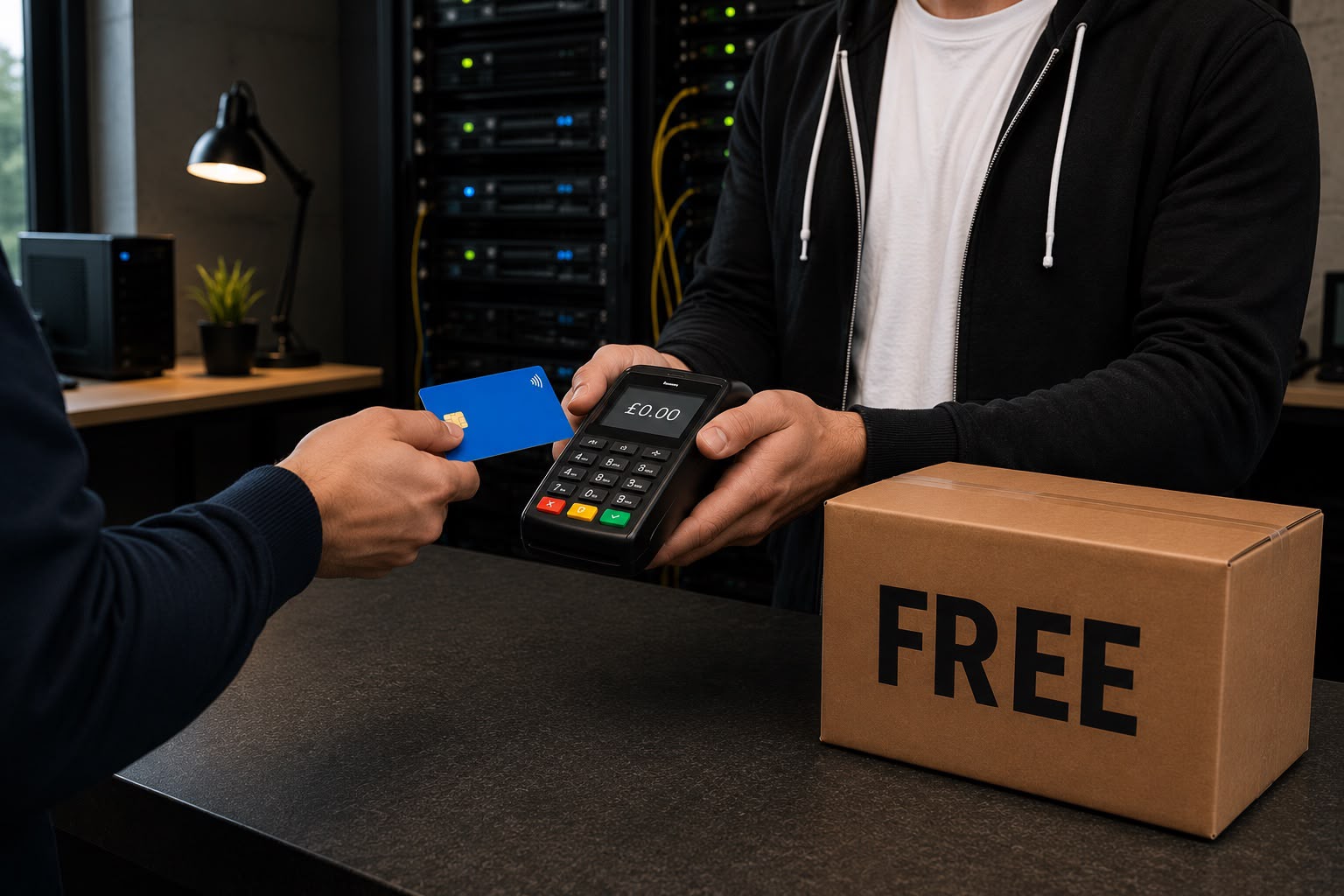
So yes, the title is deliberately awkward. Paying For Free. It sounds like a contradiction until you accept that free software and free responsibility aren't the same thing.
FreePBX being free to download doesn’t mean it’s free to operate well. It doesn’t mean support is free, judgement is free, experience is free, or the customer should be left alone with a powerful system, a search box or a chatbot.
What it means is better than that. It means the foundation is open. It means the customer doesn’t pay for artificial scarcity. It means the provider has to earn the service fee. It means the value can sit where it should sit: in the work, the decisions, the support, the engineering, and the accountability.
I used to worry FreePBX had the wrong name for the commercial world. Now I wholeheartedly believe the name tells a better story than most polished brands ever could.
It started as a description, then became a project, then an ecosystem, and eventually something businesses trusted enough to build around. That's rare, and yes, I am a huge fan. I have built my career and business around it.
I know the project isn't perfect. The name isn't perfect either.
This is how value gets built for real. Not by omitting the name, but by making the name worth something, surviving the lazy assumptions, and remaining useful.
I am proud to say FreePBX. I don't say it under my breath, I don't apologise for it, nor is it wrapped in safer language so no one asks difficult questions.
FreePBX.
The question is no longer whether FreePBX is free. The question is whether the service around it is worth paying for. If it is, say the name. If not, it was never FreePBX’s problem. It was yours.
Tell the customer what they are paying for. Tell them they are Paying For Free.
That's the right commercial model, and it’s a race to the top, not the bottom.
Kieran
This blog post was published as a LinkedIn article here.

Paying For Free